Author Archives: Katrin Becker

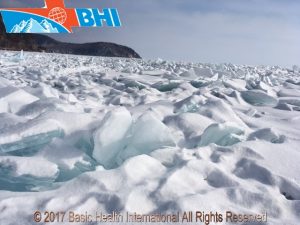
This is a magical place!

Day TWO 


These longer expeditions require some basic things to survive

Good shelter, food, fuel to melt snow/ice , foot care and attention and a positive attitude

These essentials are interdependent and could make a difference between life and death.

Right, left or straight ahead?

Travelling in a new part of the world requires a lot of dependency on the knowledge and experience of the local people.

Some in the past have ignored this to their detriment.

I am very fortunate to have the support and advice of some great local people from the Baikal area including Anna( friend of Elena) and Eugene.

So far the unleaded petrol is working.. fingers crossed….

Decided against the paint thinner.
No white gas available in this area.

Starting a new day soon…Day 3

Let’s see what today brings….

Bill


To see the full photo gallery from this trip, look here.

Baikal Walk Day 2

Day TWO

Distance Traveled: 29 Km


Beautiful crisp morning.
A little late starting 9.15 as I get into the rhythm of a new journey.


Travel was good initially but this recent snow slowed things down a bit for approx 2/3 of the day.
It would be great conditions for kiting if the winds were favourable.


Sunset Baikal walk Day2

Nature provided a beautiful sunny day with a light SW wind.


End of walk for Day 2

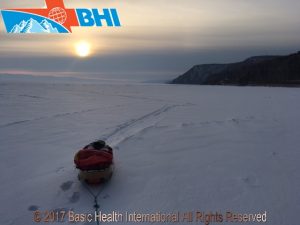
More work to plough through the fresh snow with a sled.
The light was beautiful again today.
Met some local ice fishermen along the way.


Was happy with covering just over 29 km today considering the snow conditions.

Just finished a supper of expedition freeze dried food that expired in 2014!!
Hope it works regardless.

Thanks for following….
Let’s see what tomorrow brings..

Bill


To see the full photo gallery from this trip, look here.

DAY 2

Day TWO


Mild at present minus 15.
Little wind .. a gift of nature.
Early Light comes closer to 7.30 am.
Shorter days compared to Greenland and especially Antarctica.
The light here is very special.
Hope to touch base this evening.
Thanks to all of you who are following this journey in such a magical place.

Bill


To see the full photo gallery from this trip, look here.

DAY 1

Day: ONE

Current Location: 
Zultuk

Distance Traveled: 
28 km


Started out the day with some fresh snow in Irkutsk and treacherous roads over the passes to Zultuk, the southern end of the lake.
The weather and visibility improved as the day progressed.
Covered 28 km despite the late start, heavy snow and heavy sled.
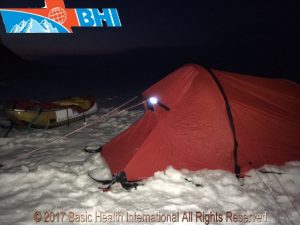
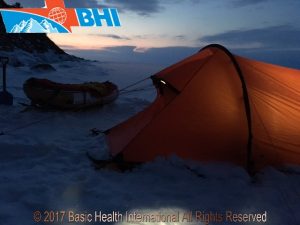
Just finished supper and settled down for the night in a quiet bay.


Let’s see what tomorrow brings!!

Best wishes,
Bill


To see the full photo gallery from this trip, look here.

Irkutsk 5am -6c light snow

Warm this am with light snow.

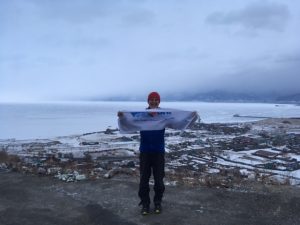
Baikal walk / Kultuk starting point

It has been a warmer than average winter here so far with a recent dump of snow
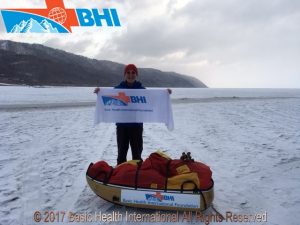
The warmer temperatures over the next few days are welcome except for the fact there will be more drag on my 75 kg sled and tougher to pull especially with more weight at the start of the trip.

Baikal walk Kultuk starting point

Good excuse to eat lots over the next few days.
Hope to consume around 5000 Calories/ day.
Guilt free chocolate consumption is a big part of long expeditions.
Problem is stopping when one gets home!

So happy to be among the Lake Baikal people and culture.

Hobnail Boots

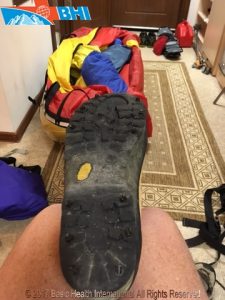
Just screwed studs into my boots and thinking of Shackleton and team wearing hob nail boots to cross the glaciers of South Georgia to get to Stromness.

Driving from Irkutsk to Kultuk at the bottom of the lake in a short while.

Then the walk northwards begins.

Best wishes to you all.

Bill


To see the full photo gallery from this trip, look here.

Greetings from Irkutsk!

Irkutsk, Siberia February 26th 2017

Arrived from Moscow around 8.20 am..no bags or sled..However all showed up on the next Aeroflot flight from Moscow.


Met Eugene at the airport and while waiting for the delayed baggage did a tour of Irkutsk.


It was a special celebration of Masleniza today in Irkutsk celebrating the transition from winter into spring.
Some early pagan rituals are carried out.
It reminded me of Wren’s day in Dingle.
It was a very emotional time passing through the village of Anascaul, Co Kerry last Friday night on my way to Baikal.
Lots of thoughts of Tom Crean and the many Irish who left its shores on their way to explore many parts of the world.
I thought also of Dervla Murphy getting on her bike in Lismore in the 1960s and cycling to Delhi with such a great spirit, little money and an enduring desire for travel and adventure.
This upcoming trip has lots of uncertainties as the adventure begins.
It’s not about breaking records, being the fastest or the slowest , it’s more about creating records of life experience and passing the knowledge onto others and learning from others.
It is more about building bridges, not walls.

The adventure begins on the ice tomorrow.


Irkutsk 

To see the full photo gallery from this trip, look here.

Baikal : A walk on the wild side.

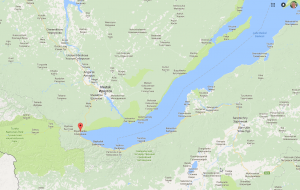
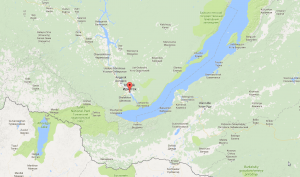
In an attempt to further highlight the health care needs of communities living in remote places across the globe, Dr Bill Hanlon is planning a 700 km, unsupported, solo expedition on ice from the southern tip to the northern tip of Lake Baikal, Siberia, Russia in late February 2017.

Lake Baikal is 640 km long, 80 km wide, is the world’s largest (by volume), oldest (25-30 million years) and deepest (5387 ft) freshwater lake.
It contains 20% of the world’s unfrozen, surface fresh water and is surrounded by beautiful mountains.
The walk will likely be over 700 km as navigation will require travelling around large areas of broken ice, pressure ridges, ice cracks/ pools etc. and the challenges of a frequent, powerful headwind.

Dr Bill will be travelling very simply with a small tent, basic food, fuel, and clothing; all being pulled by a sled on the ice and snow.
Lake Baikal was formed as part of an ancient rift valley with a long crescent shape and a surface area of 31,722 square km. The lake is geothermally very active with a resultant rich biodiversity of flora and fauna, hosting more than 1,000 species of plants and 2,500 species of animals, many of which are unique to this area.

The Baikal area has a long history of human habitation with the Han dynasty defeating the Xiongnu in the 2nd century BC and the Kurykans (6th century AD) preceding the Buryats and Yakuts.

The diversity of people and cultures in the area parallels the biodiversity of it’s natural world.

The confluence, interaction and coexistence of shamanic, buddhist and christian communities in one area makes Baikal very unique.

This upcoming “pilgrimage” is mainly about connecting with these remote communities, sharing and developing a better understanding of their health practices + needs and learning more from their unique spiritual and healing connection to the natural world.

Basic Health International would like to thank the following for their support on this adventure:

Keith & Jeri Michalak and the entire Icespike family

Mink Hollow Media, Ltd.

Mountain Equipment Coop


To see the full photo gallery from this trip, look here.

Nepal, December 2016 – a Short but Productive Trip

I am attaching some photos of a recent work trip to Nepal
I was awoken at 5.20 am two weeks ago to a 5.6 earthquake in Namche..We were 18km from the epicentre..unnerving jumping out of bed, running out into to cold, dark mountain air..sensing the fear and trepidation in the local people who had experienced so much devastation last year with over 9,000 people dead.

Medicine in the High Pamir

snap01846“As a teenager growing up in small town Ireland in the 1970’s, I was fascinated by the adventures of Marco Polo and the 13th century caravans of explorers, traders, and pilgrims who traveled the Silk Road linking Europe with Asia. Many of these caravans crossed the high passes of the Parimir and Hundi Kush ranges, traversing between present day Pakistan and Afghanistan.

I dreamed of one day traveling part of this route into such areas as the Hunza Valley of northern Pakistan, and the Wakhan Valley and Parmir range of northeast Afghanistan. In spring/summer of 2014, I visited both regions.

Read the rest of the article in the Spring 2015 issue of the Alpine Club of Canada‘s Gazette.

On Our Way

….. And then it was time to return home.

Clouds over Thapopdan massif, above village of Passu, Hunza Valley, Karakoram range, Pakistan

We reviewed our whole trip and discussed the implementation of our recommendations.

We met with the KADO solar panel project manager and donated a solar lantern for their review and modification. These excellent LED lanterns were designed and donated by Faith and Anthony Harkham, Canmore, Alberta, Canada. We are very indebted to them for their design work and donation.

Despite the threatening clouds and rain the following morning , we managed to get a flight back to Islamabad from Gilgit…which saved us many hours travel on the KKH and closer to our departure city.

It was a very productive and enjoyable trip. It would not have been possible without the great support and hospitality of the people of Hunza !

I would especially like to thank Imran, Zulfi, Mubeen, Ashraf, Alam Jan and the rest of the KADO staff for their tireless support during our visit and being responsible for making it a success.

July 12th (Saturday) Yashpirt Summer Pasture

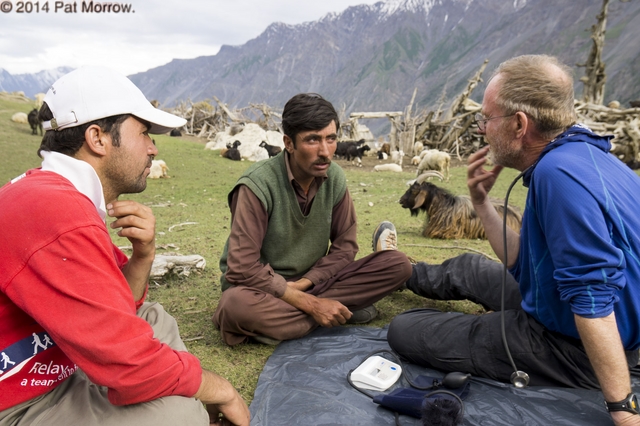
Mobile health clinic conducted by Dr Bill Hanlon, Basic Health International, for shepherds based at Yashpert pasture, Batura Glacier, near Passu, Hunza Valley, Karakoram range, PakistanEarly in the morning of July 12th we set off from Passu to the Yashpirt summer pasture on the Batura Glacier (fourth longest glacier in the Karakorum).

Our team included Imran, 2 porters Ghulam Haideo and Ameer Ahmed Jan, Pat and myself.

Our objective was to hike up the lateral moraine above Passu, cross the Batura glacier, and hike along the northern edge ascending above the glacier to the shepherd’s summer camp of Yashpirt at 3302m.

In spring, residents of Passu area travel with their goats/sheep and yaks to the summer pastures of Yashpirt. They return to Passu in the autumn moving their animals to winter pasture lower down.

Our focus was to do health assessments and health education with the shepherds in the pasture.

We started out early to avoid some of the mid-day heat. We had nice temperatures as we ascended the moraine. The temperatures increased as we crossed the broken up, convoluted glacier and increased further as we hiked along its northern edge. We had some relief from the intermittent shade of the lush wild rose bushes, juniper, willow and tamarisk as we moved closer to Yashpirt. It should be noted that there is no easy access to potable water from the trail head until close to Yashpirt. In the late afternoon we ascended to the juniper protected Yashpirt summer pasture to be greeted by two shepherds. They had just come down from the high country with their 2000 sheep and goats. We had a cup of chai before they put their animals into their nightime safe enclosure to protect them from predators. The main predators in this area are foxes, wolves and snow leopards.

This year the residents of Passu decided to delay their move up to the summer pasture until a week later because of the weather.

We did health assessments on those shepherds that were there and discussed some of the potential health issues associated with people living close to their animals.

We discussed reducing or preferably eliminating adding salt to chai and increasing daily water intake. We discussed the greenhouse idea and solar powered electric fences to avoid overgrazing.

We camped on a beautiful grassy area looking across at the upper Batura glacier, Batura Peak and surrounding ice floes.

We were treated to the powerful sounds of calving ice from the glacier throughout the night.

We donated a solar lantern and Pat donated his sleeping bag before we descended towards Passu the following morning.

It was a beautiful hike out with spectacular views down to the Passu Valley.

The following day we visited the Aga Khan Health Centre in Gulmit. At present there are no doctors there.(there had been two doctors there the last time I visited).They have a midwife(from Chipursan) and an LHV currently working there. Their e-health program is currently inactive at present. They are currently trying to negotiate with the KADO IT Centre to share some of their internet capacity.

Apparently there are currently 2 doctors stationed at the government hospital in Gulmit.

We then crossed the lake on a nice sunny day heading towards Karimibad.

The lake is still a busy place and perhaps a bit less dusty than in the past.

We had a very productive meeting with the staff at the KADO headquarters in Aliabad prior to our departure to Gilgit.

July 11th (Friday) Passu

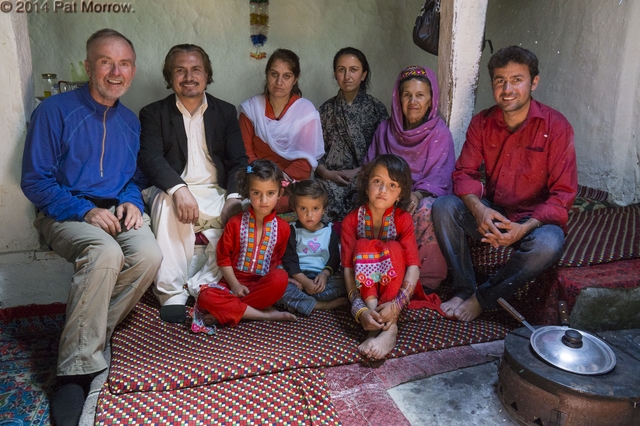
Portrait of Nawab and Irman Khan's family in Passu, Hunza Valley, PakistanOn July 11th we got the opportunity to attend the annual Salgira Festival in Passu. We were welcomed by community and scout leaders to the festival.

There was a number of speeches, religious readings and singing by local school children/scouts and community leaders.

We met some local members of the KADO board .

We adjourned to Imran’s parents house for lunch and had an interesting meeting with Imran’s brother Nawab who is a past chairman of KADO and currently works with the Aga Khan Foundation. We were joined by a number of community leaders and educators. We also met Imran’s mother, uncle, sister, Nawab’s wife and children.

July 8th (Tuesday) Back at Shimshal, Again.

on trek back from 4700 m Shimshal Pass from Shimshal village, Hunza Valley, Karakoram Range, PakistanWe woke up to a crisp, clear, blue sky morning. The early morning sun brought back warmth and great light to the pasture. After chai and chappatis at Tai Bibi’s house we donated a solar lantern to the community, said our goodbyes and started out across the snow covered, sun soaked Pamir in the direction of Shimshal. It was sad leaving these gracious, hospitable and friendly people who had generously opened up their lives and homes to us during our visit.

We left camp around 6.30am as the sun made it’s way over the surrounding peaks stretching further across the Pamir as we gained a little elevation out of camp. Shortly into our walk we were joined by the respected elder Mr Mehman Baig who joined us on our trip back to Shimshal. It was great to share the trail with him and learn more about the traditional way of life in the Pamir.

The hike back to Shimshal was a good opportunity to reflect on the health, social, economic and personal challenges the shepherds face in the Pamir.

Both summer and winter pasture residents spend many months of the year without any access to health care.

As these places will never have direct access to a resident doctor or nurse because of the remoteness and low population density, I think it is imperative that we develop better, more sustainable ways of bringing health care to them.

I think a basic health/hygiene/sanitation/nutrition community education program tailored for residents of the Pamir would be helpful. A short, basic health course for 2 or 3 interested and motivated shepherds would also be helpful. These individuals would be responsible for managing any health issues in the pasture.

I think developing an e-health program that would support the basic health worker in the pasture, link them to the Shimshal Health Centre/ Gulmit Health Centre and the specialist Health Services in Gilgit would significantly improve the health care for residents of the Pamir.

Bringing mobile/internet connectivity to the Shimshal Valley will be a good start to this plan. It was quite a change coming back to the warm temperatures, wheat/alfalfa filled fields and relative low altitude (3,000m) of Shimshal.

We met with the medical staff of the Shimshal Health Centre later that evening and discussed our visit to the Pamir, made some suggestions and plans for follow up of some of the shepherds we saw in the Pamir. We also had a long discussion re their perspective on the current TB status of the residents of Shimshal. Zulfi agreed to send me the reports from any previous TB studies in the area. We discussed the preliminary results of Imran’s mini random household study.

We later had a lovely dinner and meeting at Doulat Amin’s house with Ashraf, his family, his aunt from Gilgit (AKRSP) and religious leaders from Gulmit and Shimshal.

We finished off the day with a special meeting with Shimshal Community Leaders back at the hotel. We described our visit to the Pamir and discussed ways to improve the health of seasonal residents of the Pamir. There was many gracious words exchanged and we were presented with the gift of traditional Hunza hats, which we very much appreciated.

The next day we met with local accomplished mountaineer Mr Rajab Shah and his family at his home in Aminabad. He is a true inspiration. He is a great community leader, visionary, mountaineer, founder of the Shimshal Mountaineering Association, religious leader and family man. He has climbed all 5 of Pakistan’s 8,000m peaks including K2.He has been a great inspiration to many young mountaineers in the Shimshal Valley; a valley that has produced many great mountaineers over the years. He is humble, gracious and always so generous with his time and hospitality each time I visit Shimshal.

We met his 6 year old grandnephew who was born with hydrocephalus and had to have emergency surgery to install a shunt to relieve the pressure on his brain. He continues to have frequent seizures and is physically and mentally challenged. We discussed home physiotherapy exercises to reduce contractures, physical and emotional support strategies, safer feeding techniques, music therapy and discussed getting access to a regular supply of anticonvulsants.

We later visited our driver Sajjad’s home and met his family. He also has a 6 year old son with physical and mental challenges. He was the first twin born at term. The second twin did not survive. Both cases have significant challenges for both families, especially in a country and remote location with few medical resources.

Mr Shah agreed to do a video interview with Pat.

We met a group of gold mining families from Chilas working along the river. The children looked malnourished and did not attend school. They move back to Chilas during the winter months.

We stayed the following 2 nights in Passu.

July 6th (Sunday) Shimshal Pass Summer Pasture

Mobile health clinic conducted by Dr Bill Hanlon, Basic Health International, for shepherds based at 4700 m Shimshal Pass  (known locally as Shimshal Pamir) reached from Shimshal village, Hunza Valley, Karakoram Range, PakistanShimshal Pass summer pasture at 4700m.We woke up to a crisp morning with scattered clouds. At 5am women were milking their sheep/goats and yaks in the stone walled enclosures in subzero temperatures. There was a calm, focused silence among the shepherds in the animal enclosures. By 8am the milking was finished and the women headed back to their houses for chai and chappatis and start the process of making cheese and butter.
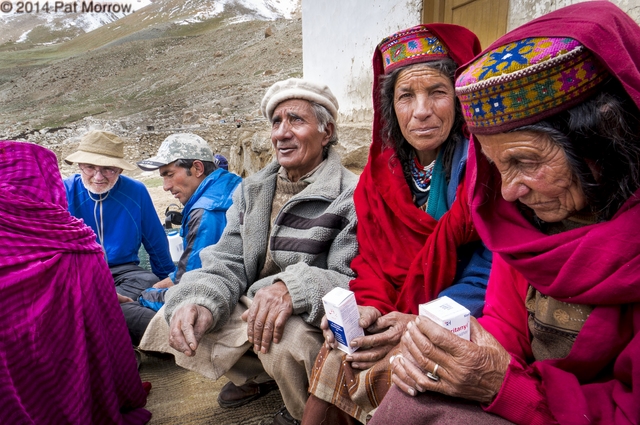
At 9am we met with community leaders who welcomed us to the summer pasture with very kind words. We started our mobile health clinic at 10am.Our aim was to complete health assessments on all of the shepherds at the summer pasture. To make this happen we extended our clinic to 10.30pm to assess the shepherds who were away from the settlement during the day. We saw a number of cases of hypertension, skin and eye infections, one case of jaundice (likely HepB), some anemia and depression.

Later that day while working in the sheep/goat enclosure a young 17 year old woman had a seizure. I saw her just after she collapsed. She showed signs of a non-tonic/clonic seizure. She had significant post ictal drowsiness, which lasted approximately one hour. She apparently had been having similar events over the previous month. Based on her living /work circumstances, there is a good chance that she has neurocysticercosis. This is a disease caused by the ingestion of the worm Taenia soleum, which travels to organs such as the brain, produces cysts that calcify and become the focus of seizure activity. It is a disease associated with people working in close contact with animals such as sheep and goats. Arrangements were made for this lady to travel to Gilgit for further diagnosis and treatment. I recommended a lady with jaundice and fatigue go down to the Shimshal HC for further investigations and treatment. We ended up seeing all the shepherds in the summer pasture over a 12 hour period.

My overall impression was that those people working in the pasture were generally in good health despite their harsh life and poor nutrition. The more healthy in the Shimshal community were more likely to travel to the Pamir. The diet of the shepherds consisted mainly of chappatis/cheese and chai. It lacked protein and many micronutrients. We saw no evidence of fruit or vegetable consumption. On special occasions people will eat yak/sheep or goat meat. There is too much salt + chai consumed, which likely contributes to the large amount of hypertension and heart disease seen. Common health problems included headaches, “breathing problems”, “asthma” (which often turned out to be gastroesophageal reflux), gastritis, hypertension, backpain/arthritis (knees especially), eye, skin infections, cataracts (high UV exposure with little protection), gastroenteritis, anxiety and depression. There was little discussion on menstrual or gynaecological issues because of cultural reasons. Our next visit should include a female midwife/nurse or doctor so these female related issues can be explored further. Some potential medical problems include brucellosis, tuberculosis and anthrax.

A number of recommendations were made to improve the overall health of the shepherds in the summer pasture of Shimshal Pamir.

  • Increased water intake and less chai to reduce headaches and prevent dehydration…people are working hard physically at a high altitude.
  • Eliminate or at least reduce salt in chai.
  • Increase ventilation in the house while cooking.
  • Improved attention to hand washing/personal hygiene/sanitation and disposal of human waste i.e. recommend the installation of a number of latrines in the summer pasture so human waste can be concentrated in one area away from human dwellings and water source.
  • We stressed the importance of separation of livestock from human living quarters to prevent the spread of worms/parasites such as Taenia and Echinococcus.
  • We discussed the construction of basic greenhouse structures to experiment with growing vegetables at a higher altitude.

I think it is worth further exploring the health benefits of local herbs/wild flowers and other plants i.e. Bozlenj (tea used to lower blood pressure) and Banafsha (used for altitude illness and blood pressure)

We did leave a solar lantern to be used by the community as needed.

We left funds to purchase sunglasses for all 35 shepherds living in the summer pasture. These sunglasses would be signed out from the community leaders each spring and returned to the community leaders in the autumn before people head back to Shimshal. The aim of this program is to reduce the incidence of premature cataracts in the community. Zulfi agreed to purchase the sunglasses in Gilgit and return them to the summer pasture.

We discussed the use of solar powered electric fences to rotate yak grazing habitat and reduce the amount of back and forth travel each day by shepherds and animals to find suitable grazing. We noted a lot of the land close to the shepherd’s summer settlement was overgrazed.

We discussed the future use of satellite supported e health connectivity between the shepherds in the pasture, Shimshal HC, Gulmit HC and Gilgit specialist health services.

During our visit, Zulfi donated one of his sheep to the community to celebrate our visit. The sheep was cooked and shared by all.

July 5th (Saturday) – Shimshal Pamir

Mobile health clinic conducted by Dr Bill Hanlon, Basic Health International, for shepherds based at 4700 m Shimshal Pass  (known locally as Shimshal Pamir) reached from Shimshal village, Hunza Valley, Karakoram Range, PakistanWe awoke to some fresh snow and cooler temperatures. We started out a little later than originally planned (7.15am) because of the conditions. We started up a very muddy, steep incline in fresh snow. Our single poles came in handy to get some traction along the steeper muddy trail.

Fortunately the snow stopped about 90 minutes into our travel. Shortly after this the clouds lifted and we were gifted with warm sunshine and no wind. It gave us the opportunity to dry out some of our gear and improved the trail conditions.

We continued the long hike along the banks of an extensive river drainage.

Further up the drainage, we met Susan, an OT from Calgary with a guide and porters. They had come down from Shimshal Pass after a few days of trekking. She had been bicycling with her friend Liam from Calgary and had taken a little time to visit Shimshal Pass. We stopped and had a tea break and nice visit in the warm sunshine. We continued along the river drainage, with a gradual ascent through a yak pasture, crossed a small bridge and had a chai break at a larger shepherd settlement. It was a beautiful setting, close to the river with great views down valley. We then started the ascent to a small pass above the huts and valley. At the top of the pass we marvelled at the great views down valley and the open meadow towards the Pamir pasture.

After a short break, we continued the long walk across the grassy meadow towards Shimshal Pamir. We watched many yaks happily grazing on both sides of us. The lush green of the Pamir meadow was in stark contrast to the arid rocky slopes of the approach. On our way we met a shepherd friend of Zulfi as he herded the yaks back to the shepherd settlement. A little later we got some more snow and the temperature dropped. The conditions confirmed we were close to 4700m at this point.

We passed 2 beautiful lakes to our left and continued along a muddy, yak trodden path towards a small

Zarat leading to the summer pasture settlement of the Shimshal community at 4700m. It is an idyllic setting with a wide open meadow, lakes and high snow-capped surrounding peaks. It is located very close to the China border.

We were greeted enthusiastically by Ashraf’s mother, Tai Bibi outside her stone pasture home. She prepared a lovely meal of yak cheese, chapatti and chai for us. We appreciated very much her giving up some of her valuable time away from her animals. Her great hospitality during our stay was very much appreciated.