Tag Archives: Expeditions

Day 6

Day SIX


There is no more email connection so communication will continue using a satellite phone.

Editor’s note: This also means that sending photos is more difficult, but Bill will send them when he can.

Today was a full-on day.
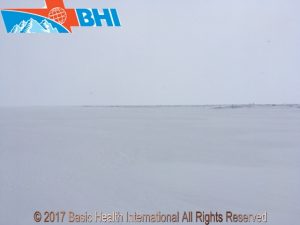
Snow and white-out conditions, making navigation difficult.
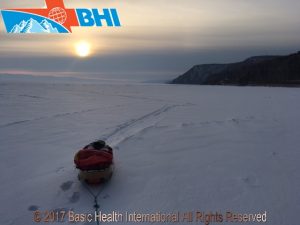
Worked my way through ice fields; pulling the sled through snow slows down everything.
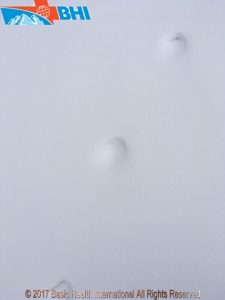
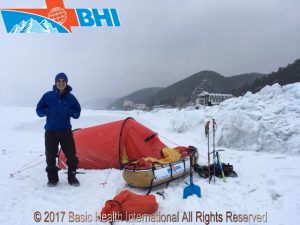
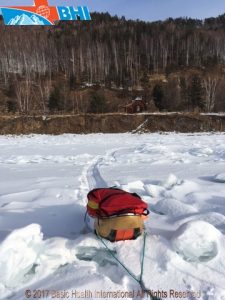
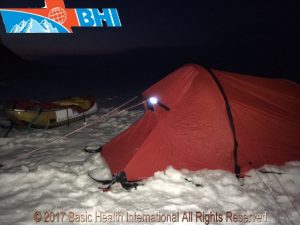
Did see some animal tracks; ended up at the end of the day camping in a nice spot on the ice near some trees, protected from the wind.
Making an attempt to find a more direct and energy-saving route.

This is truly a magical place!
Let’s see what tomorrow will bring.
Bill


To see the full photo gallery from this trip, look here.

Day 5

Day: FIVE


Scellig did not like this particular section also.


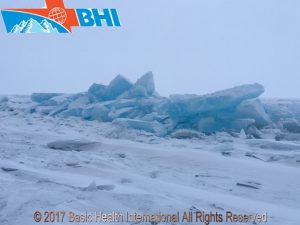
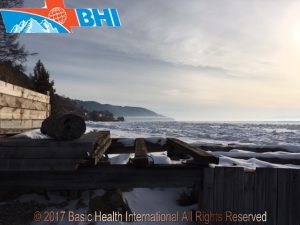
Had to make the decision early in the day to chance sticking close to coastline and hopefully find a way through the broken ice or find a way further out.

With the full on white out conditions decided to stick close to the shore.
Fortunately was able to get through.

 
Some time and energy lost travelling through the broken sections but safer.
Today was probably one of the least desirable conditions to travel by foot pulling an all inclusive house,food, fuel and other life’s essentials.
Snowing all day, minus 5, sticky snow,headwind, poor visibility.

The things we do for fun!


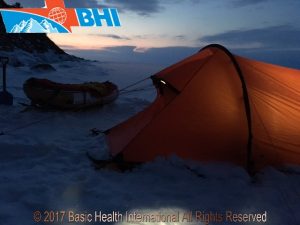
Found a slightly exposed and windy campsite near the coastline but on the ice among the rubble.

Best option I could find at 6pm.


Let’s see what tomorrow will bring.
Bill


To see the full photo gallery from this trip, look here.


Day 4 – Listvayanka start

Day: 4 

Current Location: Listvayanka


Camped on night 3 on the edge (literally) of Listvayanka on the ice
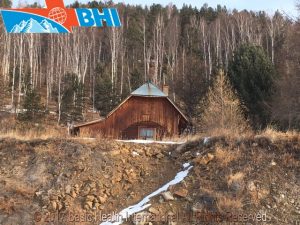
In front of a derelict building but in view of a high end hotel complex.

Which of the 3 options would you choose?

Met a Chinese tourist in the morning.

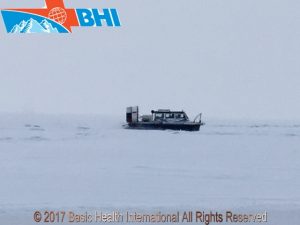
Some hovercrafts on the ice.

Warm, heavy conditions all day.

Travelling through snow up to the last hour.

Camped at a lovely spot on the ice near a dock.

Let’s see what tomorrow brings.

Bill 


To see the full photo gallery from this trip, look here.

Day 3 – Long Day


Day THREE

Current Location: Listvayanka
Distance Traveled: 32.6 KM


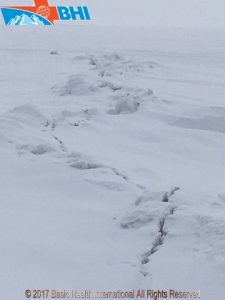
Ice Crack

Good visibility, light wind but lots of heavy ploughing through sticky snow..no ice at all today.


Pressure Cracks

The ice makes for much faster travel..

 
My sled “Scellig” wasn’t so happy either.


Pressure Cracks

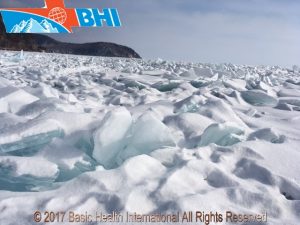
Started out route finding through a section of broken ice.


Pressure Cracks

Took a chance at staying closer to the shoreline.
It paid off today.


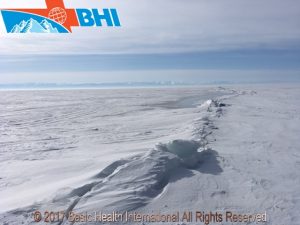
Section of Broken Ice

Met a few ice fishermen along the way.


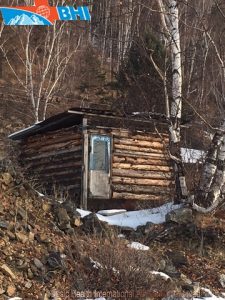
Summer cottage Lake Baikal

Walked for 12 hrs today because of the slow progress through the heavy snow.


Summer cottage Lake Baikal

Summer cottage Lake Baikal

Covered 32.6 km.

Now camped close to Listvayanka.

Wanted to cross the bay and get more protection from the wind.


The wind has really picked up over the past few hours.
Definitely looking forward to dinner this evening.


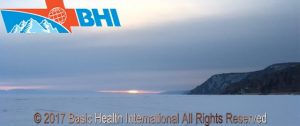
Baikal walk morning light day 3

Saw some attention focusing ice cracks today and some neat ice formations.


Let’s see what tomorrow brings…

Bill

This is a magical place!

Day TWO 


These longer expeditions require some basic things to survive

Good shelter, food, fuel to melt snow/ice , foot care and attention and a positive attitude

These essentials are interdependent and could make a difference between life and death.

Right, left or straight ahead?

Travelling in a new part of the world requires a lot of dependency on the knowledge and experience of the local people.

Some in the past have ignored this to their detriment.

I am very fortunate to have the support and advice of some great local people from the Baikal area including Anna( friend of Elena) and Eugene.

So far the unleaded petrol is working.. fingers crossed….

Decided against the paint thinner.
No white gas available in this area.

Starting a new day soon…Day 3

Let’s see what today brings….

Bill


To see the full photo gallery from this trip, look here.

Baikal Walk Day 2

Day TWO

Distance Traveled: 29 Km


Beautiful crisp morning.
A little late starting 9.15 as I get into the rhythm of a new journey.


Travel was good initially but this recent snow slowed things down a bit for approx 2/3 of the day.
It would be great conditions for kiting if the winds were favourable.


Sunset Baikal walk Day2

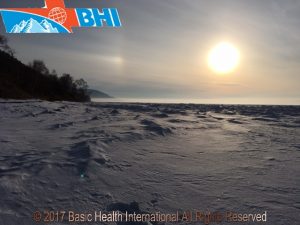
Nature provided a beautiful sunny day with a light SW wind.


End of walk for Day 2

More work to plough through the fresh snow with a sled.
The light was beautiful again today.
Met some local ice fishermen along the way.


Was happy with covering just over 29 km today considering the snow conditions.

Just finished a supper of expedition freeze dried food that expired in 2014!!
Hope it works regardless.

Thanks for following….
Let’s see what tomorrow brings..

Bill


To see the full photo gallery from this trip, look here.

DAY 2

Day TWO


Mild at present minus 15.
Little wind .. a gift of nature.
Early Light comes closer to 7.30 am.
Shorter days compared to Greenland and especially Antarctica.
The light here is very special.
Hope to touch base this evening.
Thanks to all of you who are following this journey in such a magical place.

Bill


To see the full photo gallery from this trip, look here.

DAY 1

Day: ONE

Current Location: 
Zultuk

Distance Traveled: 
28 km


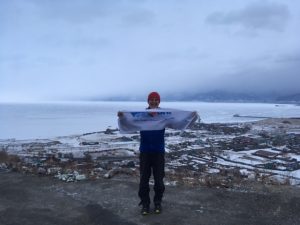
Started out the day with some fresh snow in Irkutsk and treacherous roads over the passes to Zultuk, the southern end of the lake.
The weather and visibility improved as the day progressed.
Covered 28 km despite the late start, heavy snow and heavy sled.
Just finished supper and settled down for the night in a quiet bay.


Let’s see what tomorrow brings!!

Best wishes,
Bill


To see the full photo gallery from this trip, look here.

Irkutsk 5am -6c light snow

Warm this am with light snow.

Baikal walk / Kultuk starting point

It has been a warmer than average winter here so far with a recent dump of snow
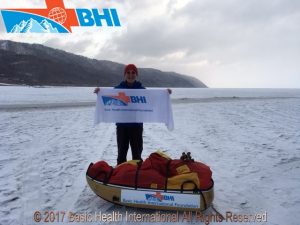
The warmer temperatures over the next few days are welcome except for the fact there will be more drag on my 75 kg sled and tougher to pull especially with more weight at the start of the trip.

Baikal walk Kultuk starting point

Good excuse to eat lots over the next few days.
Hope to consume around 5000 Calories/ day.
Guilt free chocolate consumption is a big part of long expeditions.
Problem is stopping when one gets home!

So happy to be among the Lake Baikal people and culture.

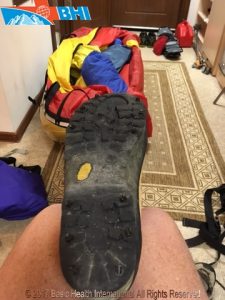
Hobnail Boots

Just screwed studs into my boots and thinking of Shackleton and team wearing hob nail boots to cross the glaciers of South Georgia to get to Stromness.

Driving from Irkutsk to Kultuk at the bottom of the lake in a short while.

Then the walk northwards begins.

Best wishes to you all.

Bill


To see the full photo gallery from this trip, look here.

Greetings from Irkutsk!

Irkutsk, Siberia February 26th 2017

Arrived from Moscow around 8.20 am..no bags or sled..However all showed up on the next Aeroflot flight from Moscow.


Met Eugene at the airport and while waiting for the delayed baggage did a tour of Irkutsk.


It was a special celebration of Masleniza today in Irkutsk celebrating the transition from winter into spring.
Some early pagan rituals are carried out.
It reminded me of Wren’s day in Dingle.
It was a very emotional time passing through the village of Anascaul, Co Kerry last Friday night on my way to Baikal.
Lots of thoughts of Tom Crean and the many Irish who left its shores on their way to explore many parts of the world.
I thought also of Dervla Murphy getting on her bike in Lismore in the 1960s and cycling to Delhi with such a great spirit, little money and an enduring desire for travel and adventure.
This upcoming trip has lots of uncertainties as the adventure begins.
It’s not about breaking records, being the fastest or the slowest , it’s more about creating records of life experience and passing the knowledge onto others and learning from others.
It is more about building bridges, not walls.

The adventure begins on the ice tomorrow.


Irkutsk 

To see the full photo gallery from this trip, look here.

Baikal : A walk on the wild side.

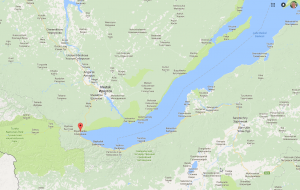
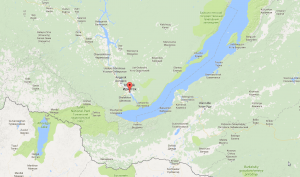
In an attempt to further highlight the health care needs of communities living in remote places across the globe, Dr Bill Hanlon is planning a 700 km, unsupported, solo expedition on ice from the southern tip to the northern tip of Lake Baikal, Siberia, Russia in late February 2017.

Lake Baikal is 640 km long, 80 km wide, is the world’s largest (by volume), oldest (25-30 million years) and deepest (5387 ft) freshwater lake.
It contains 20% of the world’s unfrozen, surface fresh water and is surrounded by beautiful mountains.
The walk will likely be over 700 km as navigation will require travelling around large areas of broken ice, pressure ridges, ice cracks/ pools etc. and the challenges of a frequent, powerful headwind.

Dr Bill will be travelling very simply with a small tent, basic food, fuel, and clothing; all being pulled by a sled on the ice and snow.
Lake Baikal was formed as part of an ancient rift valley with a long crescent shape and a surface area of 31,722 square km. The lake is geothermally very active with a resultant rich biodiversity of flora and fauna, hosting more than 1,000 species of plants and 2,500 species of animals, many of which are unique to this area.

The Baikal area has a long history of human habitation with the Han dynasty defeating the Xiongnu in the 2nd century BC and the Kurykans (6th century AD) preceding the Buryats and Yakuts.

The diversity of people and cultures in the area parallels the biodiversity of it’s natural world.

The confluence, interaction and coexistence of shamanic, buddhist and christian communities in one area makes Baikal very unique.

This upcoming “pilgrimage” is mainly about connecting with these remote communities, sharing and developing a better understanding of their health practices + needs and learning more from their unique spiritual and healing connection to the natural world.

Basic Health International would like to thank the following for their support on this adventure:

Keith & Jeri Michalak and the entire Icespike family

Mink Hollow Media, Ltd.

Mountain Equipment Coop


To see the full photo gallery from this trip, look here.

Calgary Herald: Albertan skis to South Pole for a cause, Jan 27, 2010

Albertan skis to South Pole for a cause
Cochrane doctor takes health care to the poor
Valerie Berenyi
Calgary Herald
Wednesday, January 27, 2010


I t’s not easy to sum up Dr. Bill Hanlon’s remarkable ski expedition to the South Pole in a single news story, so here are the Coles Notes:

The highs: the austere beauty of the Antarctic landscape; the camaraderie of three men pushing beyond their limits; the singular pleasure of sharing a can of Pringles on Christmas Day in a tent on a polar ice cap.

The lows: frostbite; constant headwinds adding to -40 C temperatures; repetitive strain injuries from pulling sleds laden with 54 kilograms of supplies across 1,200 kilometres of ice and snow for 47 long days.

After successfully reaching the South Pole on Jan. 2, Hanlon recently flew back from Chile to re-enter daily life as a family doctor in Cochrane. He’s also the founder and medical director of Basic Health International Foundation, a non-profit that brings health care to poor people living in remote, high-altitude places.

He’s still recovering from his physical ordeal, which involved skiing steadily upward from sea level at Hercules Inlet to the top of the South Pole at 2,835 metres. He did the trek with two companions, American explorer Eric Larsen and Dongsheng Liu, a Shanghai engineer.

The trio ate about 6,500 calories a day to fuel their eight-and 10-hour days: freeze-dried foods laced with butter and oil and as many chocolate bars as they could eat.

“I actually didn’t lose a lot of weight, only four pounds,” said Hanlon. “After some Chilean beer and steaks, I was back to normal.”

His frostbitten thumb has yet to fully heal. In their first week on the Antarctic ice — devoid of plant or animal life — the temperature plunged to -50 C and Hanlon wasn’t protected well enough against the extreme cold. It could have derailed the trip, but as trip physician he was able to treat himself, learn to use his left hand more and suck it up for daily tasks, such as lacing his boots, requiring both hands.

“It was definitely a wake-up call. That environment is very unforgiving.”

Although this was his first polar expedition, Hanlon knows about unforgiving places.

Two weeks before embarking on his Antarctic expedition, the seasoned adventurer was at the other end of the temperature spectrum when he summited Carstensz Pyramid in the hot jungle of Papua New Guinea.

There, he completed his 20-year quest to climb the tallest peaks on all the continents, including Mount Everest, which he tackled in May 2007. Only an estimated 200 climbers have achieved this mountaineering feat, known as the Seven Summits.

It was among the peaks that Hanlon found his passion: combining remote area medicine with physical challenges. It started about two decades ago, when he worked with Tibetans in the Darjeeling Himalayas. He was deeply touched by the people, the climbing and the geography.

Since then, he’s spent three or four months of every year volunteering to bring primary health care to those living in geographically isolated communities in countries such as India, Peru, Honduras, Thailand, Nepal, Tibet, Ethiopia and South Africa.

“These adventure trips are basically a way to promote some of our international medical work in remote areas,” he said, explaining that after each trip — paid for out of his own pocket — he gives talks to raise awareness and funds for Basic Health International Foundation.

His next talk, Medicine in High Places, is slated for Feb. 9 at the Banff Centre.

Hanlon’s experiences at the South Pole taught him a lot, said Hanlon, who is planning an expedition to the North Pole. Unlike the short, intense experience of climbing, this was more of a slow ultra-marathon: “a long plod.”

“It’s one of the few areas where middle age is an advantage,” the 55-year-old singleton said with a laugh.

If Hanlon went to Antarctica to promote awareness of medicine for the developing world, Larsen went to raise awareness of global warming with his Save the Poles expedition. Liu was there to fulfil a childhood dream of being the first person from China to reach the South Pole.

Despite the physical and mental challenges, the three men worked together well.

“I love the journey rather than the destination,” said Hanlon. “When we got to the South Pole, it was almost a letdown because it was over.

“It’s remote, you have to be completely self-reliant and rely a lot on teamwork. I love an expedition in the sense of being out there in the elements, working efficiently as a team, in that kind of harsh environment.

“It reminded me of how adaptable we are as a species.”

vberenyi@theherald.canwest.com

© Calgary Herald 2010

Reaching the South Pole , Cochrane Times, Date: Jan 2010

Reaching the South Pole
Posted By Brad Herron of The Cochrane Times


Reaching the South PoleThree small souls at the pole.

By Brad Herron

On. Jan. 2, a Cochrane doctor joined his childhood heroes like Ernest Shackleton, Robert Falcon Scott and Roald Amundsen as explorers of Antarctica.

For 47 days, Bill Hanlon braved temperatures that reached below -50 C and bitter winds to raise awareness for remote-area medicine.

With two other men — including one from China who became the first Chinese man to ski to the pole — Hanlon skied across Antarctica, guided only by a compass, to conquer a life goal and promote Basic Health International, his foundation.

And while he has accomplished many other feats, including climbing Mt. Everest in 2007 while serving as the expedition’s doctor, travelling across the frozen landscape provided unique challenges not seen in any other locale.

On days when the wind picked up, Hanlon said travel became something akin to being a ping pong ball inside a lottery machine; directionless and, at time, nearly lost.

“One day I was navigating where I couldn’t see my skies,” Hanlon said. “It can be nauseating at times, because when you are navigating in a complete white-out like that it is hard to know what’s what.”

While the trip was going to be a physical struggle from the beginning without added challenges, Hanlon received frostbite on his right thumb during the seventh day of the trek, something he now blames on not heating his core to an adequate temperature before leaving camp. Luckily, Hanlon packed along medication for just this reason, medicine he credits for “saving” his thumb. But enough though his thumb was saved, it made daily tasks difficult for the right-handed man and even two weeks later, the blackened thumb is still sensitive to temperature.

Putting pain aside — something each of the man did, as Hanlon said his fellow travelers often received large blisters on their feet — the crew travelled about 26 to 28 kilometres per day, extending their skiing to 42 kilometres one day and staying in camp due to weather another.

In constant sunlight, the men rose each morning at 6 a.m. and were on their skis by 8 a.m., travelling into the evening hours before pitching camp and starting the experience over.

“When your body is wanting to stop or feels that it is time to stop, you have to ignore those vibes and get going. It’s like having a Monday morning experience every day for 50 days,” Hanlon said.

Just maintaining a steady body weight is an arduous task, Hanlon explained. During the trip, Hanlon increased his diet to 6,500 calories per day, taking in as much high-calorie food as his 55-year-old body could handle, even mixing olive oil and large globs of butter into his oatmeal during breakfast.


“One of the few times in life when you can eat large quantities of chocolate, carbohydrates and fat without feeling guilty about it,” Hanlon chuckled, adding he lost four pounds during the trip, but quickly added them back by dining on Chilean steak and drinking a few celebratory beers.

After more than a month-and-a-half of travel, the trio spotted the South Pole — with consists of a ceremonial pole as well as a research station — nine km from where they had planned to camp. Feeling energized, they continued on and finished their journey.

Hanlon said it was a “very strange feeling” arriving at the pole, as members of the research team came outside to meet the men.

“Having travelled, just the three of us for 47 days without any animals or anything, it was very strange. The toughest part was adapting to the change,” he said,

Within two days, and after letting the icicles from this beard thaw, Hanlon and the others were on a plane to the edge of the continent. From there, they set out on a Russian aircraft that brought them back to Chile and civilization.

From his doctor’s office in Cochrane, Hanlon said the trip taught him new lessons in “teamwork and endurance,” lessons he believes he can use in his daily life and potentially pass on to others.

“One of the nice things I really love about expeditions is it really pares down the extra stuff in life and you are down to basics, like survival, food, shelter and a stove to melt snow,” Hanlon said.

 

Success! Trekkers make it to South Pole updated 9:56 a.m. MT, Sun., Jan. 10, 2010

Success! Trekkers make it to South Pole updated 9:56 a.m. MT, Sun., Jan. 10, 2010Three small souls at the pole.

Healthy Remote Communities / Save the Poles Expedition (Nov – Dec 2009)

Dong and Bill showing off their 'explorer's portions'. Soon it will be freeze dry, oatmeal and Clif bars.Dr. Hanlon is one of only three expedition members on the Antarctic leg of the Save the Poles Expedition beginning November 7, 2009.

See the South Pole / North Pole News and Guide for additional information.

This is a link to the start of the adventure on Eric Larsen’s (expedition lead) Trip Blog