
 We woke up to a crisp, clear, blue sky morning. The early morning sun brought back warmth and great light to the pasture. After chai and chappatis at Tai Bibi’s house we donated a solar lantern to the community, said our goodbyes and started out across the snow covered, sun soaked Pamir in the direction of Shimshal. It was sad leaving these gracious, hospitable and friendly people who had generously opened up their lives and homes to us during our visit.
We left camp around 6.30am as the sun made it’s way over the surrounding peaks stretching further across the Pamir as we gained a little elevation out of camp. Shortly into our walk we were joined by the respected elder Mr Mehman Baig who joined us on our trip back to Shimshal. It was great to share the trail with him and learn more about the traditional way of life in the Pamir.
The hike back to Shimshal was a good opportunity to reflect on the health, social, economic and personal challenges the shepherds face in the Pamir.
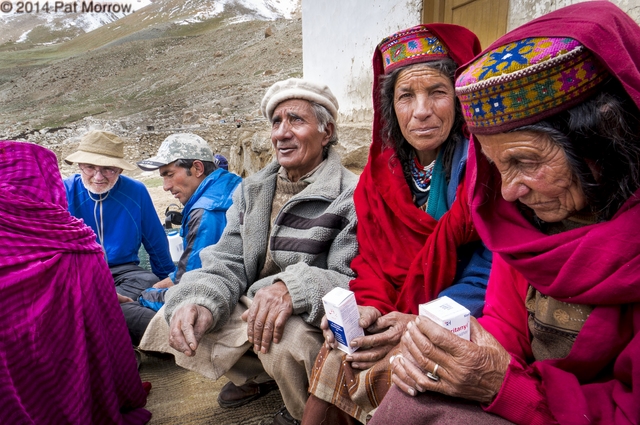
Both summer and winter pasture residents spend many months of the year without any access to health care.
As these places will never have direct access to a resident doctor or nurse because of the remoteness and low population density, I think it is imperative that we develop better, more sustainable ways of bringing health care to them.
I think a basic health/hygiene/sanitation/nutrition community education program tailored for residents of the Pamir would be helpful. A short, basic health course for 2 or 3 interested and motivated shepherds would also be helpful. These individuals would be responsible for managing any health issues in the pasture.
I think developing an e-health program that would support the basic health worker in the pasture, link them to the Shimshal Health Centre/ Gulmit Health Centre and the specialist Health Services in Gilgit would significantly improve the health care for residents of the Pamir.
Bringing mobile/internet connectivity to the Shimshal Valley will be a good start to this plan. It was quite a change coming back to the warm temperatures, wheat/alfalfa filled fields and relative low altitude (3,000m) of Shimshal.
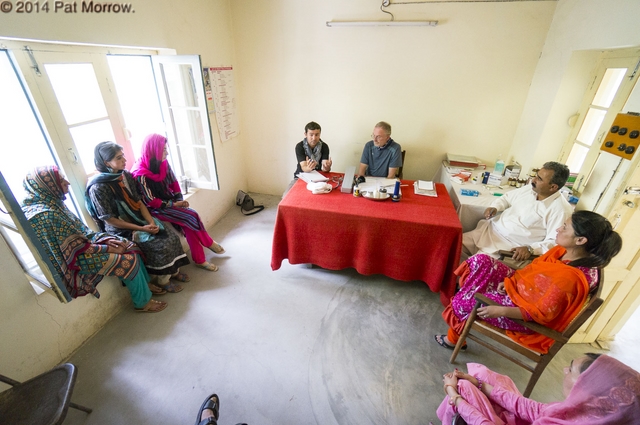
We met with the medical staff of the Shimshal Health Centre later that evening and discussed our visit to the Pamir, made some suggestions and plans for follow up of some of the shepherds we saw in the Pamir. We also had a long discussion re their perspective on the current TB status of the residents of Shimshal. Zulfi agreed to send me the reports from any previous TB studies in the area. We discussed the preliminary results of Imran’s mini random household study.
We later had a lovely dinner and meeting at Doulat Amin’s house with Ashraf, his family, his aunt from Gilgit (AKRSP) and religious leaders from Gulmit and Shimshal.
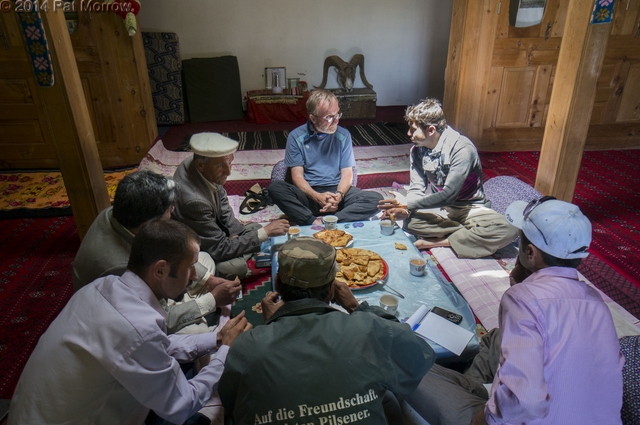
We finished off the day with a special meeting with Shimshal Community Leaders back at the hotel. We described our visit to the Pamir and discussed ways to improve the health of seasonal residents of the Pamir. There was many gracious words exchanged and we were presented with the gift of traditional Hunza hats, which we very much appreciated.
The next day we met with local accomplished mountaineer Mr Rajab Shah and his family at his home in Aminabad. He is a true inspiration. He is a great community leader, visionary, mountaineer, founder of the Shimshal Mountaineering Association, religious leader and family man. He has climbed all 5 of Pakistan’s 8,000m peaks including K2.He has been a great inspiration to many young mountaineers in the Shimshal Valley; a valley that has produced many great mountaineers over the years. He is humble, gracious and always so generous with his time and hospitality each time I visit Shimshal.
We met his 6 year old grandnephew who was born with hydrocephalus and had to have emergency surgery to install a shunt to relieve the pressure on his brain. He continues to have frequent seizures and is physically and mentally challenged. We discussed home physiotherapy exercises to reduce contractures, physical and emotional support strategies, safer feeding techniques, music therapy and discussed getting access to a regular supply of anticonvulsants.
We later visited our driver Sajjad’s home and met his family. He also has a 6 year old son with physical and mental challenges. He was the first twin born at term. The second twin did not survive. Both cases have significant challenges for both families, especially in a country and remote location with few medical resources.
Mr Shah agreed to do a video interview with Pat.
We met a group of gold mining families from Chilas working along the river. The children looked malnourished and did not attend school. They move back to Chilas during the winter months.
We stayed the following 2 nights in Passu.
 Shimshal Pass summer pasture at 4700m.We woke up to a crisp morning with scattered clouds. At 5am women were milking their sheep/goats and yaks in the stone walled enclosures in subzero temperatures. There was a calm, focused silence among the shepherds in the animal enclosures. By 8am the milking was finished and the women headed back to their houses for chai and chappatis and start the process of making cheese and butter.
 We awoke to some fresh snow and cooler temperatures. We started out a little later than originally planned (7.15am) because of the conditions. We started up a very muddy, steep incline in fresh snow. Our single poles came in handy to get some traction along the steeper muddy trail.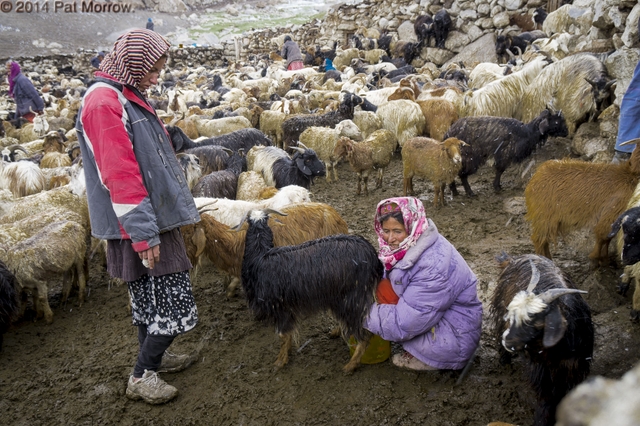
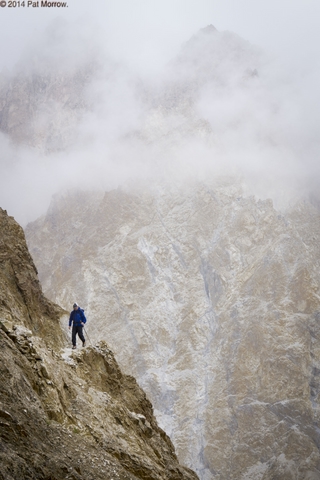 On July 3rd around 6am with low cloud we headed out of Shimshal village on foot towards the Pamir.
 We then visited Nambardar Baig Doulat and family at their beautiful home in Khizarabad overlooking the Shimshal Valley. He is an amazing 95 year old farmer, father, grandfather and great grandfather, community and spiritual leader living with four generations in the same house. When we arrived, he had just come back from working in his beautiful garden.
 The following day we headed up the adventurous 55km Shimshal Road from the KKH and Passu. This road has a long and interesting history. It was built with a lot of local villager voluntary work over a 20 year period with some financial support from the Government of Pakistan and the Aga Khan Foundation.
 The following morning we drove the 23 km north and west to Misgar. The approach to Misgar village is especially beautiful this time of the year. The fields were vibrant with wheat/barley and alfalfa crops with snow capped peaks towards Mintaka and Kilik Passes in the background. The water in Misgar is very pure. It looks so clear as it runs through the human made channels throughout the village.
 The following morning we left Alam Jan and his family and headed down valley.
 The following day we crossed the Atabad Lake heading north to Shimshal.
 Our trip started out on an adventurous note, with a political diversion to Lahore for 15 hours and eventually arriving in Islamabad 15 hours later than expected. We caught a few hours sleep and then drove up the Karakorum Highway (KKH) for 2 days with many army roadblocks along the way.
 In June/July 2014, Dr. Bill Hanlon, Founder and Medical Director of Basic Health International Foundation returned to


